

Introducing Complicity Navigator
A platform for tracking corporate complicity, and taking action

I. Two photos
Here are two photos from January 24, 2026 - exactly one week ago as I write this.
The first is a still from the video of Alex Pretti’s killing:

This is the pile of agents on top of Pretti, moments before he was shot. We have all seen it. It was taken at 9:01 AM CT.
Here’s the second photo:
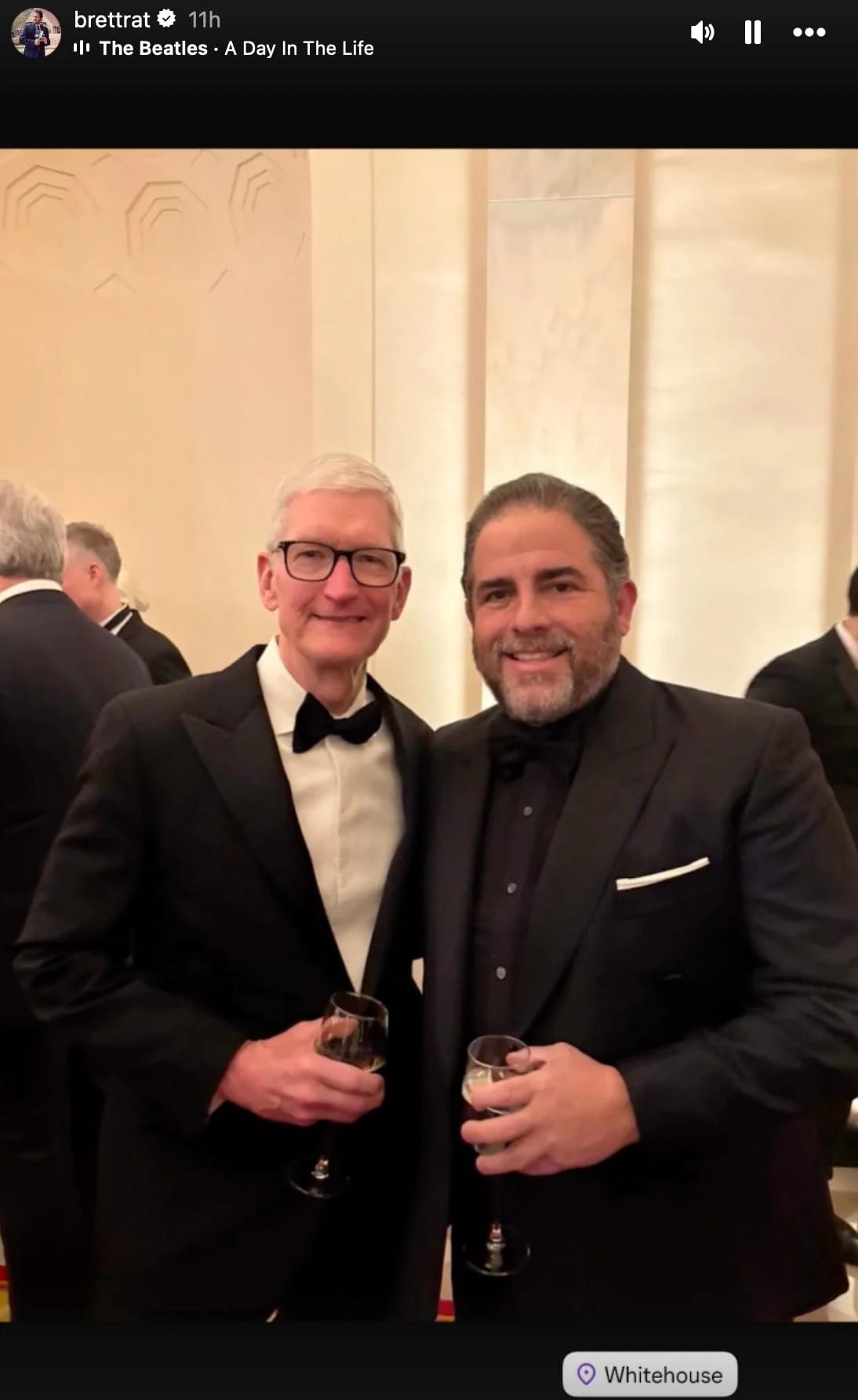
This is Apple CEO Tim Cook with Brett Ratner, director of Melania, taken that evening at a private White House screening of that film.
The contrast between the two photos is obvious, but it does not tell the whole story, because Cook, who has a world-class press team and at minimum an Apple News+ subscription, would have known about the first photo when the second was taken.
He would have known that Pretti had been killed, thanks to the policies of the man providing the champagne that evening. He would have known that the whole country—the whole world—was watching the video. He would have known that by 11:30 AM, his host’s Department of Homeland Security was already publicly accusing the man who’d just been executed of wanting to “massacre law enforcement.”
And of course he knew that they’d inflicted on Minneapolis and the rest of the country another tragedy of death and defamation just a few weeks earlier.
Cook is widely considered methodical, analytical, detail-oriented; that’s how he got the position he holds. Knowing what he must have known, he chose to put on his tux and raise a glass in tribute.
II. Silence
Cook isn’t alone in making that calculation. He is, for now, the most visible symbol of the failure of American companies to stand for American values. That failure is widespread.
With our democracy buckling under the weight of this administration, Americans are casting about for institutions to hold it up. Congress is an afterthought and the Supreme Court an enabler. The Republican Party is in the President’s pocket and the Democratic Party is nowhere. So we look to American business, with the enormous resources and influence at its disposal, to say something, to do anything.
But mostly we get silence. Look for a single major American corporation taking a clear, unequivocal, and public stand against hastily-trained masked agents killing Americans in the street with impunity and you will not find it. The best we have is this statement on January 25 from the leaders of Minnesota-based companies:
With yesterday’s tragic news, we are calling for an immediate deescalation of tensions and for state, local and federal officials to work together to find real solutions.
This is an empty statement. It says nothing, and it isn’t worth the time it took to coordinate the signatures of 60 CEOs.
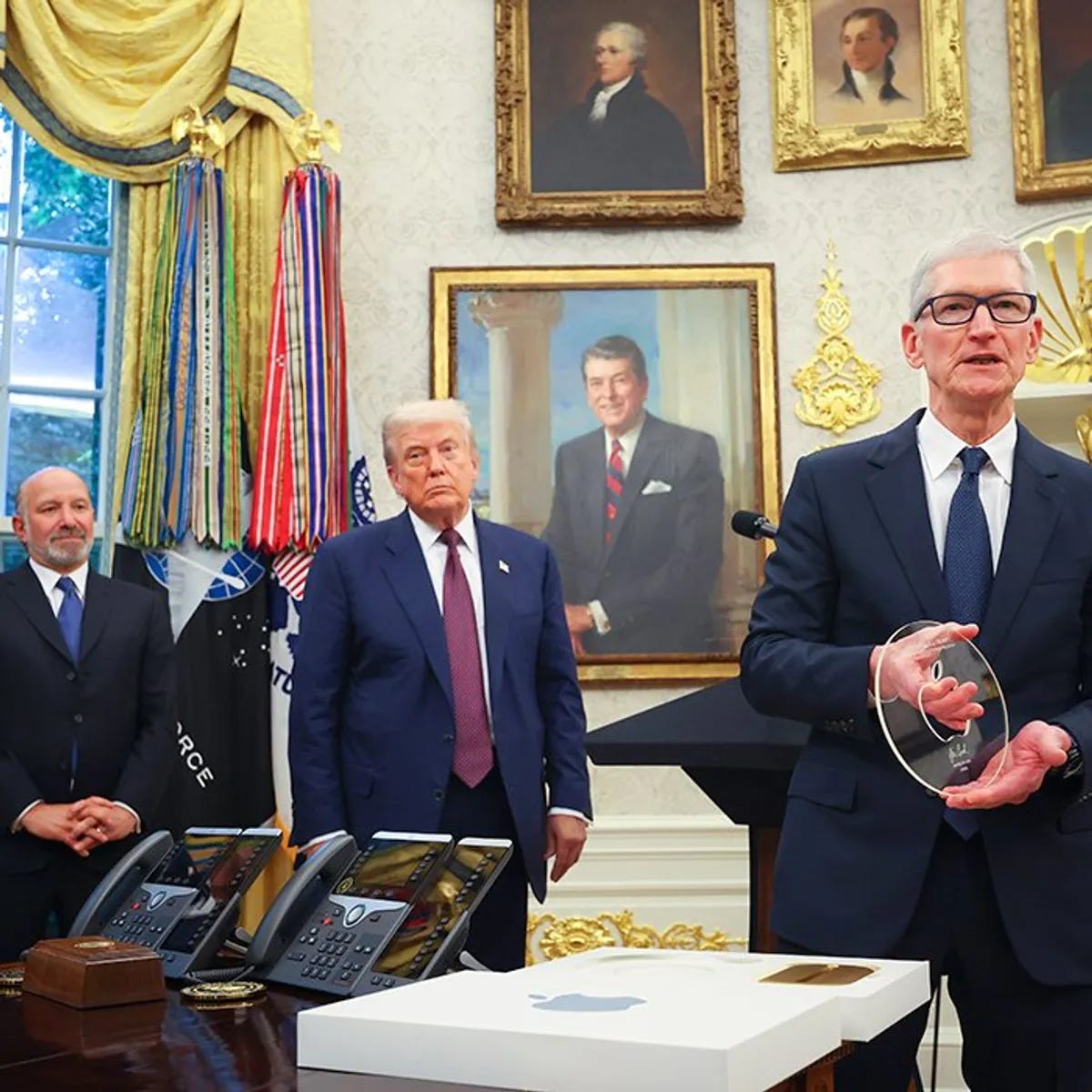
Why won’t they speak? Because of the shrewdness of the administration. From before they took office—from even before election day—the administration signaled that they would hold grudges. Companies that crossed them would face lawsuits, canceled contracts, regulatory intimidation, perhaps even prosecution. Companies that went along would enjoy perks. And so there’s Tim Cook again in August, presenting the President with a gold and glass trophy just before Apple received an exemption on a semiconductor import tariff.
It’s not hard to understand. Executives signed up for the job of making their companies profitable, not defending the constitutional order. There are practical arguments for why they should nonetheless stand up—for example, that the disintegration of the rule of law won’t serve shareholders. But the real reason is simpler and clearer. In this moment, if you have a voice, you are required to use it.
III. A tool for accountability
The administration is adept at applying pressure to businesses to get its way. The public should be able to do the same, but it’s harder to focus our attention. There is so much news happening all the time that it’s difficult to organize attention, and the constant stream means that acts of corporate complicity can easily be forgotten. There are activists who have done it, incredibly, but they are working against the odds.
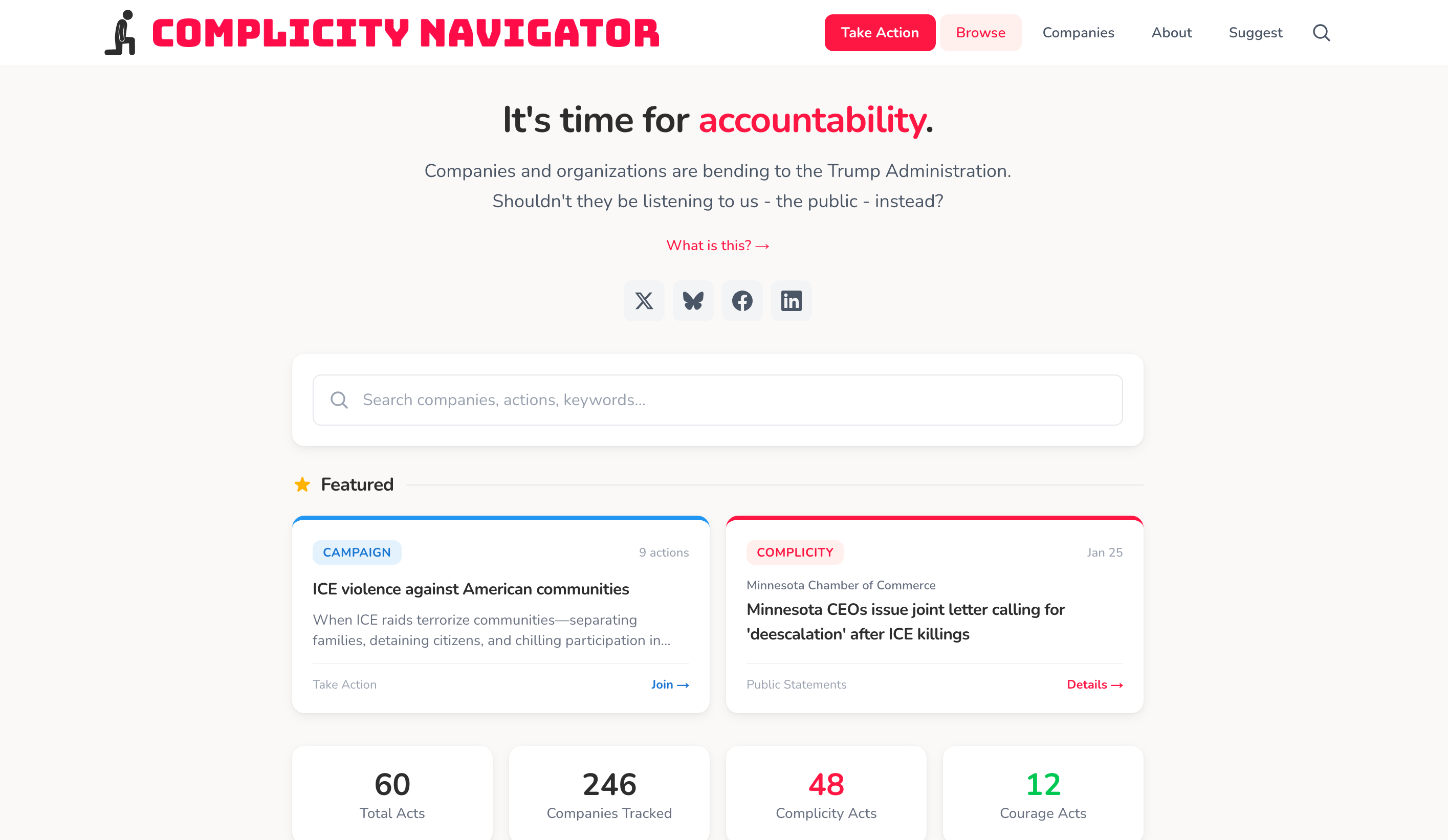
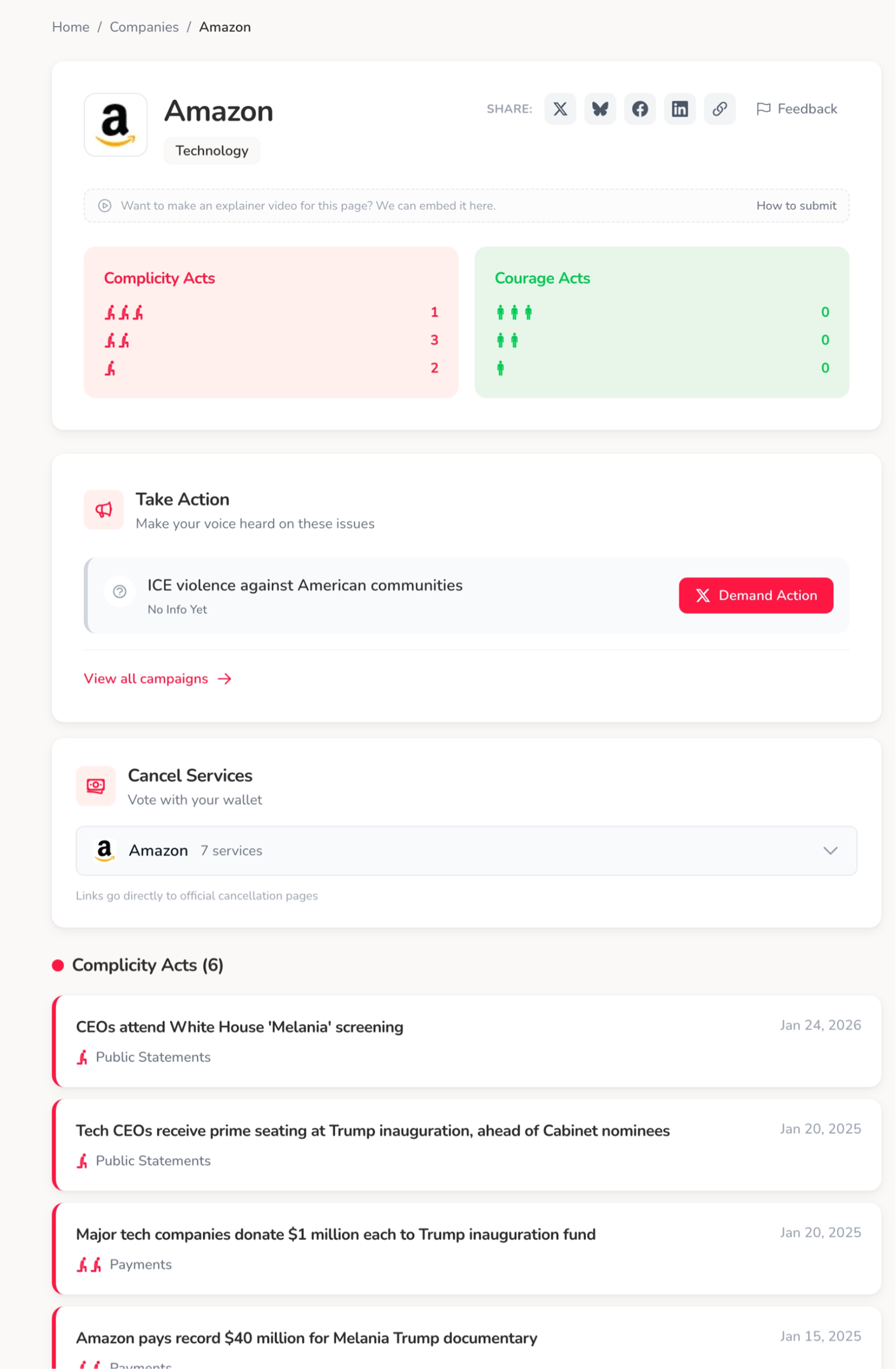
Today I’m launching Complicity Navigator to help. Complicity Navigator keeps track of when companies stay silent, bend to administration pressure, or actively collaborate. It also captures when they make a stand for principle. It gives users easy tools to learn more, to call out companies online, to share what they’ve learned with their networks, and even to cancel services from companies they no longer want to support. The goal is to create awareness for the public and pressure for companies.
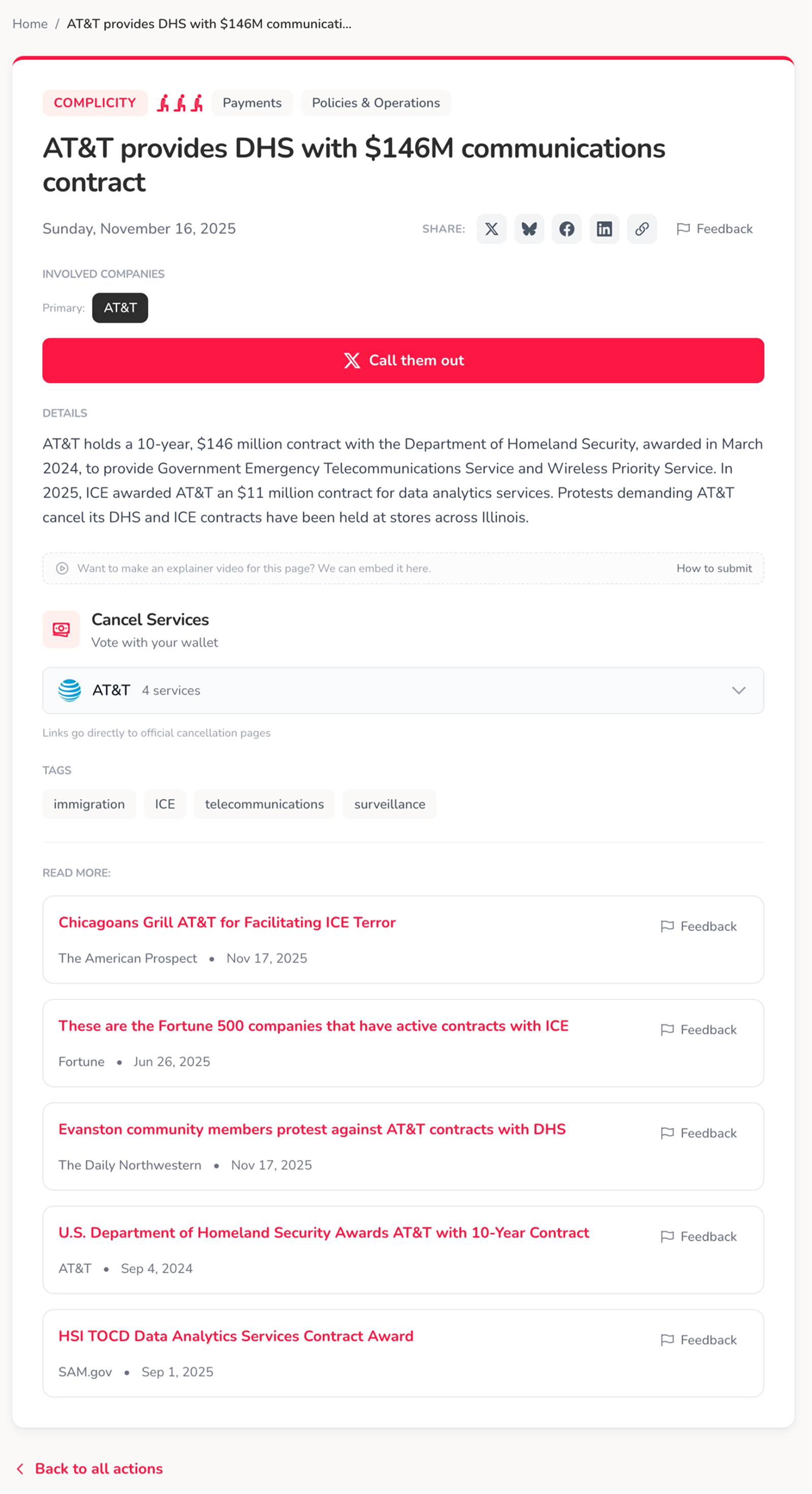
I didn’t make this because I’m anti-business or because I assume the immorality of the private sector. I worked in large American companies for more than a decade. Most of that time was at Microsoft, and it was a great job. I know that the people in those companies are ordinary people with consciences who cannot stand what’s happening to the country; I know because I was one of them. But, their leaders are afraid of retaliation and choose to go along. I see strong public pressure as a way to push companies to do what their employees want them to do anyway: the right thing.
Complicity Navigator has no business model, no revenue, no user data. It’s a volunteer effort. It’s also a work in progress. There are still features to add and events to capture, but it’s a start.
I hope you’ll take a look, give it a try, leave feedback, and pass it along. If you want to help build and maintain it, or collaborate in some other way, let me know.
American businesses have enormous influence, and we gave it to them with our money, our attention, and our work. We deserve better from them.

Its definitely time for accountability.
Well said